Community Spotlight: Kristen Millares Young
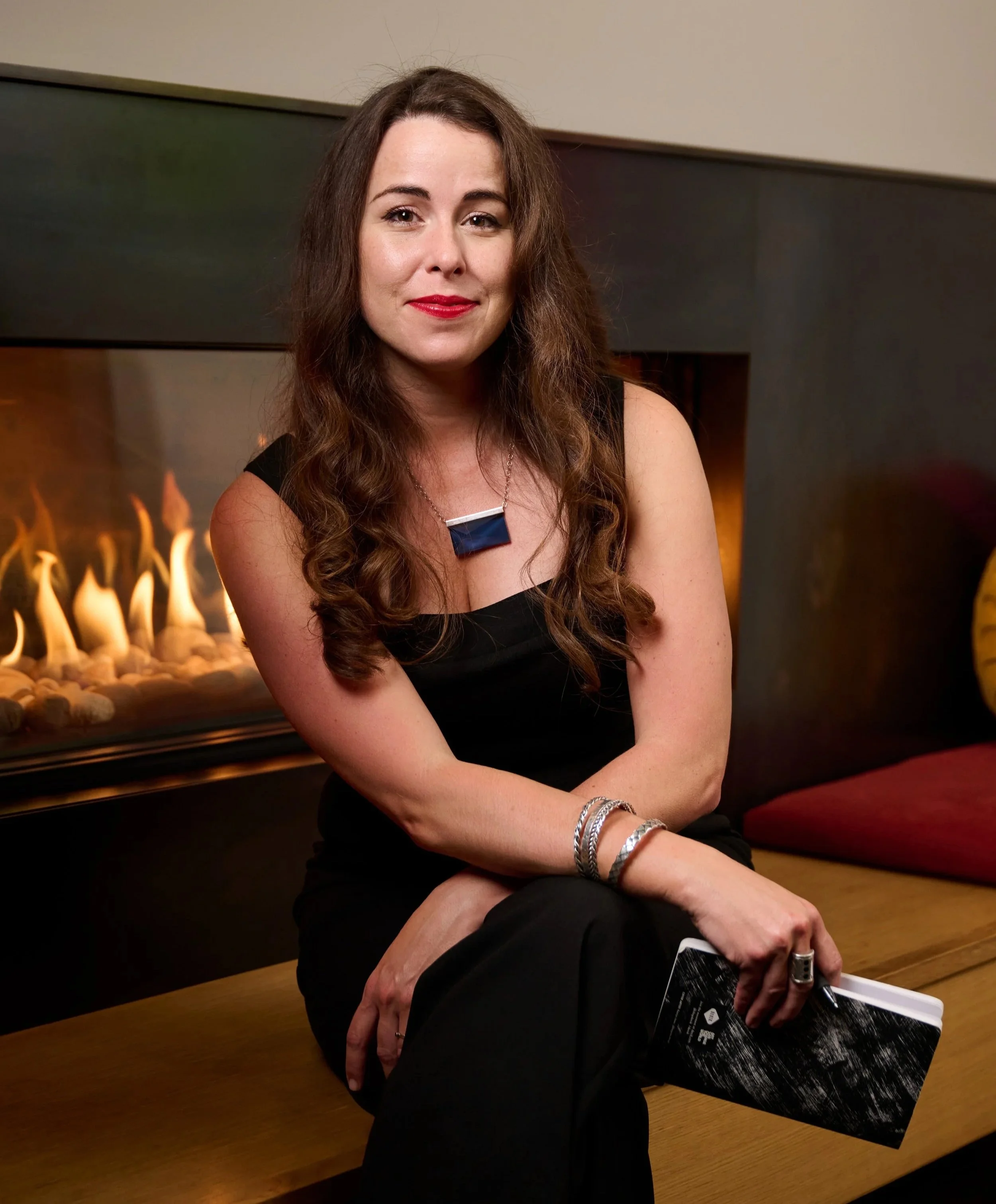
Kristen Millares Young (Portrait by Chona Kasinger)
Jennie Shortridge: Hi Kristen! Thanks so much for answering some questions for us. You have a new book coming out, right? Can you tell us more about that?
Kristen Millares Young: Thanks for asking, Jennie. I’ve spent the past ten years investigating a pagan mother goddess cult whose remnants I encountered beneath an old stone church not far from my ancestral village in northwestern Spain.
Like most origin myths, including those of my Cuban matriarchy in diaspora, the story of the great mother goddess Cybele has many tellings, and it’s hard to say if any of them are true. Cybele was a fearsome goddess whose dominance in the Roman era was erased by the rise of the Virgin Mary, though Cybele was no virgin.

In my memoir Desire Lines, I reckon with the silences that move beneath generations. Let’s put it this way: I backed my way into making Desire Lines, and if I had known I was going to write a memoir, I might not have allowed myself to become a writer at all. But here we are. Desire Lines will be published by Red Hen Press on October 6, 2026.
JS: I’ve been seeing some buzz about it…
KMY: Yes! Mil gracias to Ms. Magazine for naming Desire Lines a most anticipated feminist book of 2026 and to People magazine for revealing the cover alongside my first interview.
I am going to launch Desire Lines at Elliott Bay Book Company on Friday, October 9th. My dear friend, the Salon critic Melanie McFarland, will moderate our discussion of the lyric essay, the pagan bedrock beneath Catholic icons, Latinidad and the complications of motherhood within the patriarchy, and the enduring power of the divine feminine.
JS: For those who don’t know the many hats you wear (and have worn) in Seattle’s literary community, can you tell us some of your career highlights?
KMY: Well, let’s see. From 2018 to 2026, I reviewed dozens of books for the Washington Post, whose diminishment is a good reminder that oligarchs should not control the means by which we inform each other of vital truths. RIP, Book World. I am in talks with other outlets, but I want to take a moment to praise my editor Stephanie Merry for encouraging me to bring queer, BIPOC and indie thought into the canon.
I just wrapped up five years with the Humanities Washington Speakers Bureau, crisscrossing the state to serve 800 writers with fifty free and bilingual creative writing workshops. After a series of distinguished visiting writer gigs, I have joined the faculty of a low residency MFA program hosted by Oregon State University’s Cascades campus in Bend, Oregon.
A little while back, I edited SEISMIC — Seattle, City of Literature, an essay collection that reflects on the UNESCO designation by which “Seattle’s literary reputation was solidified on the world stage,” according to the Seattle Times. A 2021 Washington State Book Award finalist available via free download, SEISMIC opens with an exhortation by Rena Priest (Lhaq’temish (Lummi) Nation) and closes with an oral history by Ken Workman (Duwamish).
JS: Okay, let’s talk about Iceland. We were so pleased when you were selected for the residency in our sister City of Lit Reykjavik last November. What was that experience like for you?
KMY: Reykjavík’s literary scene is how I imagined 1920s Paris to be.
JS: How wonderful!
KMY: To give you an idea, I walked into Kaffi Vest, a café across the street from the Vesturbæjarlaug geothermal pool. I was a bit early because I was going to meet Sjón. The author of Moonstone and The Blue Fox, Sjón was in an anarcho-Surrealist political party that came to power through satire. An interesting thinker. Anyhow, I was trying to get a seat, and there were some of the country’s foremost writers, stacked table upon table: Auður Ava Ólafsdóttir (Miss Iceland), Jón Kalman Stefánsson (Fish Have No Feet), Thóra Hjörleifsdóttir (Magma), and Eva Rún Snorradóttir (author of Older Women and co-founder of the Queer Situations festival). We said hello and gave hugs.
After interviewing thirty leading authors and feminists for my project, I came to think of Reykjavík as a global village. I kept running into intellectuals on the street.
JS: What other impressions of Iceland did you come away with?
KMY: The Icelanders I met are hardworking, ethical, funny, thoughtful, direct, and erudite. Even when the country’s residents lived in crushing poverty for centuries, they read the sagas and treasured poetry. Amidst a high literary culture which now includes free college tuition and grant-based salaries to artists, the writers I met have more capacity to write their books.
The hustle is real and ongoing, but health care, parental leave divided between both parents, and access to early childhood care make a real difference in society. America should try spending less on war and more on care.
JS: So, what was your focus project while you were there?
KMY: I went to Reykjavík hoping to understand the literary and sociocultural context for the 50th anniversary of the Icelandic Women’s Day Off. In 1975, ninety percent of Icelandic women went on strike, effectively shutting the country down. They didn’t call it a strike – too political. Instead, they called it a “day off” – and who doesn’t deserve a day off?
But truly, the Women’s Day Off, or Kvennafrídagurinn, was anything but. Mass mobilizations led to walkouts, from factories and daycares to homes and the holds of ships. One year later in 1976, a gender equality bill passed the Icelandic parliament, paving the way for the world’s first nationally elected female president and a host of ongoing reforms.
For the first time, Iceland’s government is run by a majority of women: both the president and the prime minister are women, most of its cabinet ministers are women, and the coalition that took power in 2024 was formed by three women-led parties. Iceland has led the world in gender equality for fifteen years, according to the World Economic Forum.
Iceland is a good model for what is possible when a country values women and the arts. And yet, forty percent of Icelandic women have endured domestic violence, and the nation’s leading experts say that the judicial system cannot deliver justice to survivors of sexual assault.
How to create liberty within a system which, while leading the world in gender equity, can become complacent? And what can we, as Americans, learn from a country whose model is far more equitable than what we’re dealing with at home?



In my Electric Literature list of feminist Icelandic books, contemporary authors invoke the incongruence of living in a country with gender balanced policies alongside high rates of domestic violence, persistent pay disparities, and other forms of misogynistic disregard.
I’m still at work on the larger story, untangling why empathy built on gender empowerment and a well-read culture isn’t enough to claim a feminist utopia. It is something deeper, more intrinsic, that determines a society’s values, beyond the showcase of government positions and the Christmas Book Flood. It is the violent reality of men and of domestic expectations, and lurking at the foundation, a sense of belonging denied by the systems that society is built upon.
JS: International UNESCO Cities of Literature residencies come up several times during the year, and we post those calls for submissions on our social media and in our newsletters. Do you feel any Seattle writer could benefit from such a residency, or only if they’re working on a project closely aligned with the residency city?
KMY: Absolutely. And yet, it takes some doing to create a worthwhile project that aligns a writer’s interests with a residency city. Their selection committees consider hundreds of applications in many cases, particularly if there is a global call. Be judicious but go for it.
My thanks to Kjartan Már Ómarsson of Reykjavík Bókmenntaborg UNESCO and Inga María Leifsdóttir, project manager for Reykjavík City of Culture, for their support during my residency.
JS: And finally, any last words for our readers?
KMY: Social paralysis and isolation are the intended effects of cruel governments. Be with the folks who value your personhood, and make a plan for collective action. Pa’lante.
JS: Thank you, Kristen, and good luck with the new book!
Kristen’s memoir, Desire Lines, will be published October 6, 2026, and her launch event takes place at Elliott Bay Book Company on October 9, 2026. Mark your calendars!