International Translation Day: Meet Some Seattle Translators

It’s that one day a year when we all light a candle for St. Jerome: International Translation Day! Placed as we are between multiple languages and cultures, Seattle is a natural home for translators, and for cross-cultural exchange. Below are a few people and institutions that are making Seattle an International City of Literature.

The first great resource is the Northwest Translators and Interpreters Society (NOTIS), a regional chapter of the American Translators Association. NOTIS provides a wide range of services, information and events, including – in happier times, anyway – local meetups for translators to get together and share their experiences across language pairs and genres.

The University of Washington – and its Press in particular – have been powerhouses of language research, multilingual archives, and translation for decades, so it’s no surprise that the UW has also started a translation hub, which is meant to knit together a wide range of people and programs, raising the profile of translations, translators, and translation studies. They put on semi-regular events; you can sign up for their newsletter (and subscribe to various social media) here.

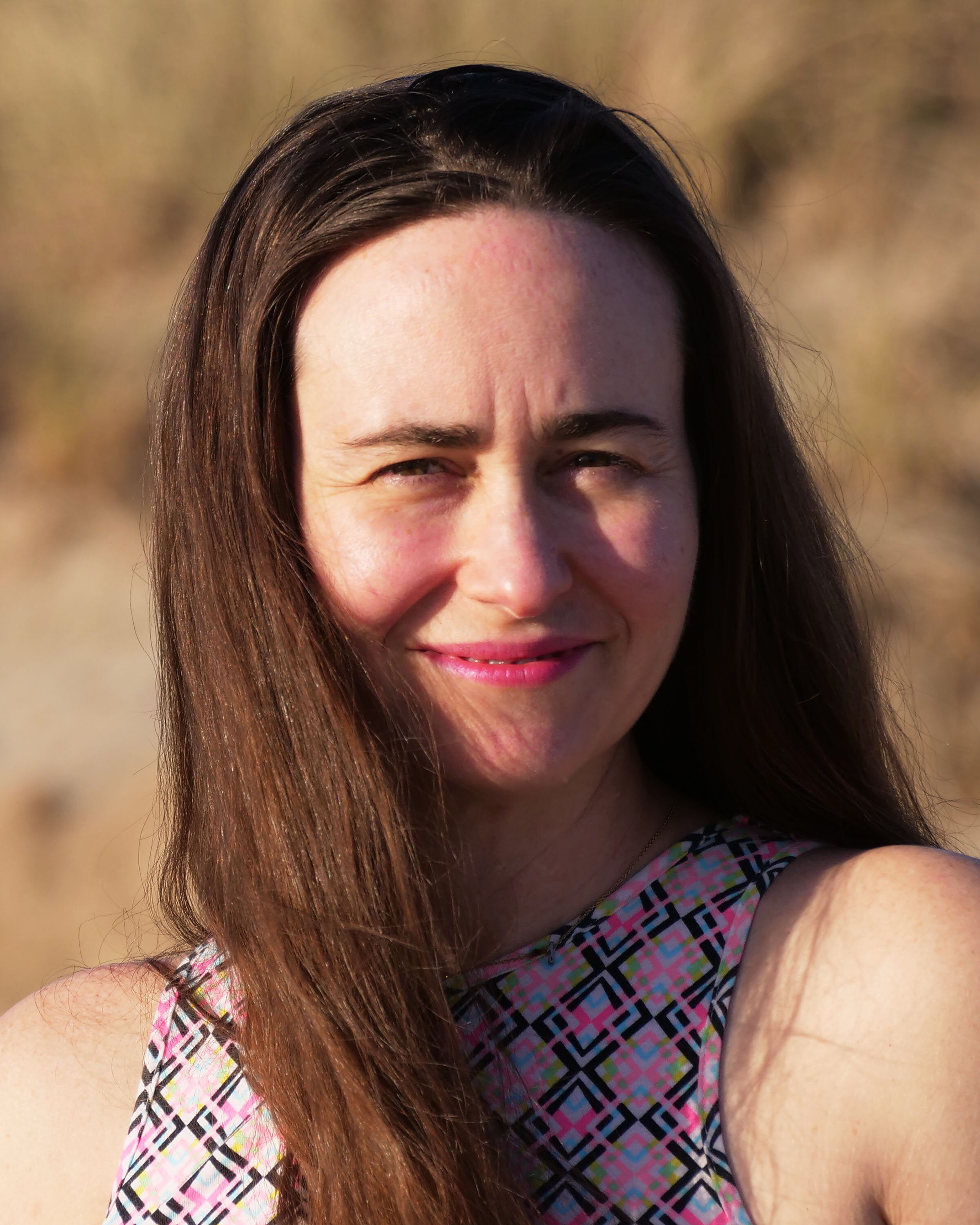
Nicholaas Barr

Nicholaas Barr

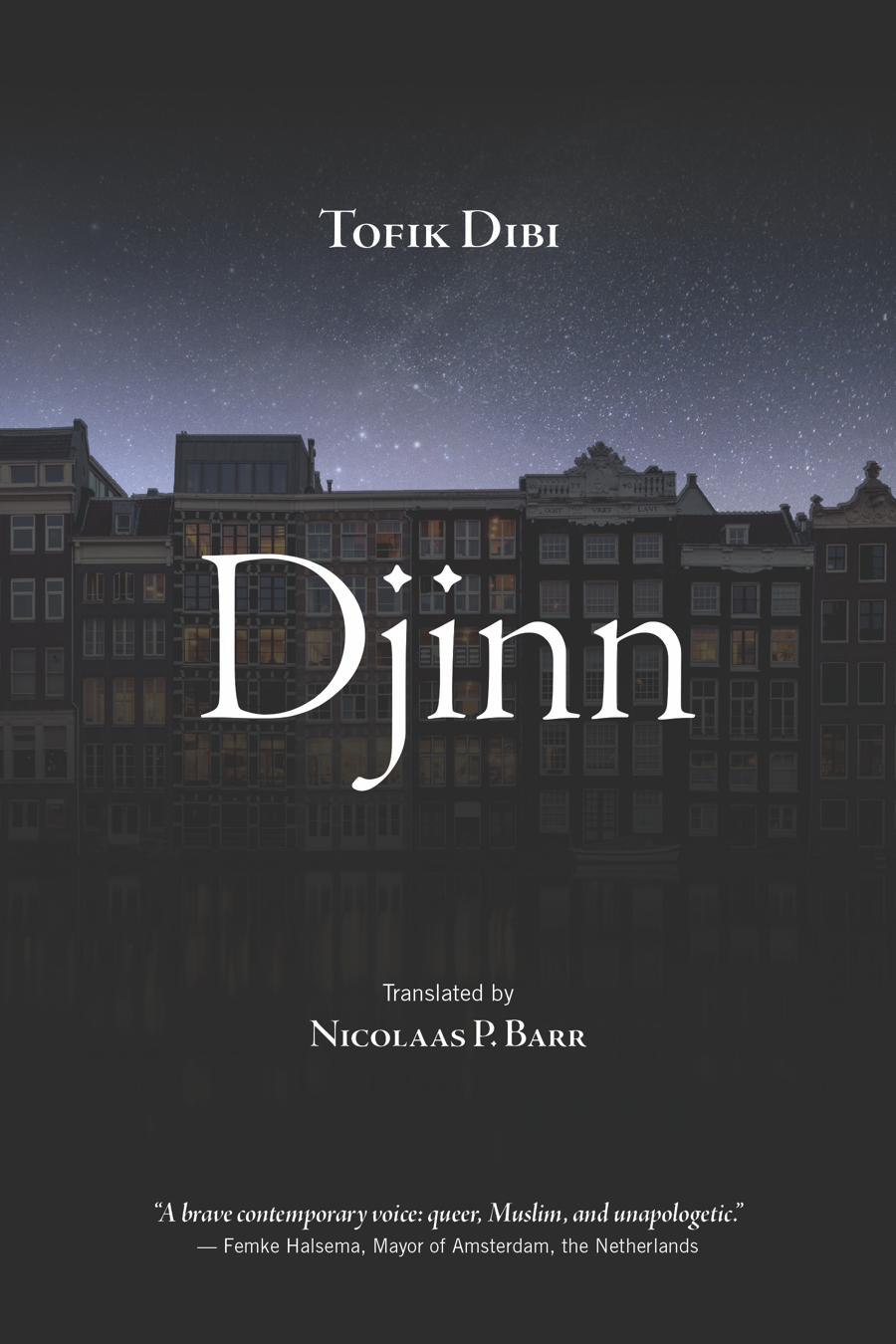
And no surprise, furthermore, that both of our featured translators today are affiliated with the UW! First up is Nicolaas Barr, Director of Study Abroad and lecturer at the UW’s Comparative History of Ideas. A translator from the Dutch, his most recent translation publication is the memoir of Moroccan-Dutch politician Tofik Dibi, titled Djinn, published earlier this year by SUNY Press, as part of their Queer Politics and Cultures series. From the publisher’s description:

“A bestseller upon its publication in Dutch in 2015, it tells the poignant, at times heartbreaking, story of Dibi’s coming-of-age as a gay Muslim man with humor and grace.”

In an interview with the UW News, Barr talks about how the memoir “cuts through the dominant ‘clash of civilizations’ narrative between supposedly tolerant Europe, on the one hand, and minoritized people, especially Muslims, on the other.

“Dibi was born in the Netherlands, speaks Dutch as a first language, and grew up steeped in Dutch culture and institutions, yet like other people of color, he is often treated as a permanent newcomer — or worse, as an unwanted threat. In addressing these themes, “Djinn” offers a compelling counter-narrative, showing how Dibi’s multiple identities are deeply entwined in the country’s distinctive cultural landscape.”

Tofik Dibi. Photo by Lisa Zilver
Tofik Dibi. Photo by Lisa Zilver

Dibi_Djinn_cover.png

Our second featured translator is Mary Childs, also at the UW’s Comparative History of Ideas department (probably no accident that many translators have found a home there), where she teaches courses on Environmental Humanities and Post-Soviet studies. She’s been translating from the Georgian since 2007, and her upcoming novel translation is Form 100, by Zviad Kvaratskhelia, due out in October from BookLand Press. Kvaratskhelia is an editor and publisher in Tbilisi, and his short story “Peridé”, also translated by Childs, was featured in Comma Press’ collection The Book of Tbilisi.

Zviad Kvaratskhelia

Zviad Kvaratskhelia

tbilisi.jpg

We asked her to tell us a bit about the experience of translating Form 100, which won a SABA literary prize for Best Novel of the Year in 2016. “The novel was difficult for me when I first started working on it, as it deals with violence against women in the country of Georgia, and the ramifications of that violence in the lives of the perpetrators. I had a few years break between initially translating and then editing for publication, and in this time, I researched more about domestic violence in Georgia, and came to understand the intense taboo of talking about it. When I had the opportunity to polish the translation, I realized that this would be an important occasion for a wider public to hear, and read, some open discussion on the topic. I look forward to hearing and reading more of Zviad Kavaratskhelia's works.”

As do we. Happy International Translation Day, everyone: get out and read a book!
/

Seattle Writers Selected for Korean Residency Programs


Seattle City of Literature is pleased to announce that two local writers have been selected to participate in writers’ residencies in Korea this fall.

Jeanine Walker was selected as Wonju City’s inaugural writer in residence. She will be in residence at the Toji Cultural Centre for approximately six weeks, while working on her forthcoming novel. 
Takami Nieda was one of two writers selected to be in residence in Bucheon. Her residency in Bucheon will be for approximately four weeks, while working on a translation of Lee Hoesung’s Travelers of a Hundred Years.

Both writers were selected after a competitive application process, and each will participate in local events, give classes and meet with local writers during their stays.

Takami Nieda is a Japanese English literary translator, specialized in translating literature of the Korean diaspora, specifically of writers born and/or living in Japan. Her translation works include Kazuki Kaneshiro’s Go, published in March 2018; and The Color of the Sky is the Shape of the Heart by Chesil, forthcoming from Soho Press in April 2022. Nieda’s translation of Go won the Freeman Book Award in 2019. She is currently working on a translation of Travelers of a Hundred Years, written by zainichi Korean writer Lee Hoesung. This translation was initiated by Literature Translation Institute of Korea. Nieda teaches at Seattle Central College.

 A recipient of fellowships from Artist Trust and the Jack Straw Cultural Center, Jeanine Walker has published poems in Chattahoochee Review, Prairie Schooner, New Ohio Review, and Third Coast, and her debut poetry collection, The Two of Them Might Outlast Me, is forthcoming from Groundhog Poetry Press in fall 2021. She holds a Ph.D. in Creative Writing and Literature from the University of Houston and teaches poetry in public schools through Seattle Arts & Lectures’ Writers in the Schools program and at Hugo House. Jeanine also writes, produces, and acts in films with her partner, Steve Mauer.

Bucheon, South Korea was designated a UNESCO City of Literature in 2017. Their residency program aims to increase international exchange and communication, contribute to the mobility of writers, translators, and cartoonists, offer a creative and inspiring environment and provide them an opportunity to introduce their work to Korean readers. For more information about Bucheon UNESCO City of Literature visit https://www.seattlecityoflit.org/citiesoflit.

Wonju, South Korea was designated a UNESCO City of Literature in 2019. This is the first year of their residency program, which was designed to promote understanding and friendship between the UNESCO Cities of Literature. For more information about Wonju UNESCO City of Literature visit https://www.seattlecityoflit.org/citiesoflit.     


/

“Seattle runs faster than a river and inevitably changes”

 
image_1_b_f.jpg
 

Mortada Gzar moved from Iraq to Seattle – via the International Writing Program at the University of Iowa – in search of lost love. His new memoir traces this journey circuitously. To quote Paul Constant’s Seattle Times interview, “As a five-year Capitol Hill resident, Gzar writes beautifully about Seattle at a pre-pandemic moment in which it was growing at a quicker rate than almost any other American city. ‘Seattle runs faster than a river and inevitably changes,’ he writes, adding, ‘there are millions of Seattles that take turns here. I feel this while I walk the amazing streets in the heart of the city or its outskirts. I sense its skin corroding and another skin growing, only to be shed and replaced again.’”

Addressed to unlikely audiences from new roommates to Heraclitus the three-legged dog and Richard Beyers’s clothing-covered statue People Waiting for the Interurban in Fremont, Gzar tells his story to his new city as a means of understanding it himself. From idylls like the brief days he spent falling in love with Morise in Basra to the horrific abuses he suffered as a young gay man growing up in Iraq, the story surprises at every turn, wrenching the heart and delighting the imagination in equal measure.

 
image_9_b.jpg
 

Seeing Seattle through the eyes of a newly arrived immigrant, I fell in love with it anew – and also cringed with shame about the injustices that prevail here. Leaving Iraq offered freedom of expression, but our wild income inequality, racism, and xenophobia is no utopia. As an author writing from two cultures at once, Mortada Gzar is a human embodiment of UNESCO’s vision of cultural exchange. I’m in Seattle, Where Are You? is an Iraqi memoir – translated from Arabic by award-winner William M. Hutchins – and it is also an American one. From the relative safety of his home in Capitol Hill, Gzar can reveal truths impossible to publish in Iraq, as well as those he faces seeking permanent employment, kinship, and stability here in the Emerald City.

Join Seattle City of Literature on Tuesday, June 22, at 6pm Pacific, for a conversation between Mortada Gzar, translator William Hutchins, and moderator Christopher Merrill director of the International Writing Program at the University of Iowa . More information and tickets for this free event here.


Gabriella Page-Fort is co-owner and book buyer at Hex Enduction Records & Books in Lake City, Seattle, and Editorial Director of Amazon Crossing, an imprint publishing international writers and the publisher of ’m in Seattle, Where Are You. She is editor-in-chief of the Hex Enduction Quarterly and plays in local bands Dragon, Tissue and Stickers. Gabi is a board member on the Seattle City of Literature board.

Disclosure: Seattle City of Literature is a recipient of an Amazon Literary Partnership grant.

/

Seattle City of Literature Stands with the Writers of Color Alliance

At Seattle City of Literature, we have had a strong working relationship with Hugo House, and we celebrate the role it plays in the community and in Seattle’s status as a designated UNESCO City of Literature. However, as we have followed the efforts of writers of color to bring equity and accountability to Hugo House, namely the labor of Claudia Castro Luna, Anastacia Renée, Harold Taw, Dujie Tahat, and Shankar Narayan, we have been concerned by Hugo House’s response.

Nonprofits everywhere are being tasked with constructing ways to better serve our communities as we recognize how deeply imbalanced philanthropy is, and how rooted it is in white supremacy. The incredible gift that these community leaders are giving Hugo House—the specific grievances, concrete ideas for solutions, and the generosity they’ve afforded everyone involved—cannot be overstated. When faced with the overwhelming prospect of dismantling a system that predates us and, for many people, a system that is only just now becoming visible, a custom-designed map for an organization’s journey is invaluable.

Hugo House is a hub in our literary city; and a literary city is only as strong as the stories it shares—and how substantively it cares for its storytellers. Hugo House has corresponded with the community (specifically in emails stating it wants to “do better”), but the organization has thus far failed to listen to community members who have put in uncompensated labor to help Hugo House examine itself and transform. This is a betrayal of the organization's mission at the most basic level, and a breach of the community's trust—a breach that will be difficult to repair.

In its approach over the last year, Hugo House has not only undercut the work of individual staff members and teachers who have pushed for racial equity, the House’s leadership has also disrespected the writers who started the racial equity pledge. It has failed to receive this situation for what it is: an opportunity to not just appreciate the richness of the community it serves but to grow as an organization with the entirety of our community in mind.

As non-profit arts organizations, none of us can avoid the work of self-examination, least of all on racial equity. Seattle City of Literature is committed to amplifying anti-racist efforts and interrupting the systemic oppression that has too long favored Seattle’s majority-white cultural institutions. We honor the labor of our community’s activists in their continued work for access. And we hope that Hugo House, as it strives for racial equity, will listen when held accountable, provide leadership that can meet the current moment, accept the gift of transformation, and model what organizational growth can be. As we await Hugo House’s response, Seattle City of Literature stands with WOCA organizers and offers them our continued support.

“Opening the literary world to everyone who loves books or has a drive to write,” as Hugo House’s vision statement says, should be a mandate and not just a message.

/

Local Bookstores' COVID Hours

We know you are eager to support local bookstores during this difficult time, so one of our tireless board members reached out to area stores to gather information on their COVID hours and protocols. These are updated in our community catalog, but here’s a handy list. Oh, and fantastic news! Soon most of these stores will have print copies of our new essay collection, Seismic, available!

Explore the "Bookstores: Covid Hours" view on Airtable.

/