Resources for the Literary Community

 
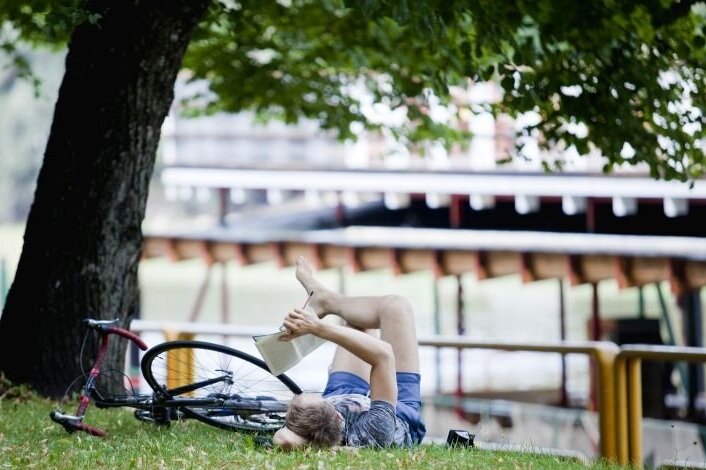
Photo by Vlad Tchompalov via Unsplash

Photo by Vlad Tchompalov via Unsplash


The COVID-19 public health crisis has shaken the global community. We’re heartbroken by the impact that the crisis is having on Seattle’s literary community.

On April 14, 2020, Seattle City of Literature co-founder and current Board President Rebecca Brinbury sent a letter to Governor Inslee asking him to consider classifying bookstores as essential businesses during this crisis. Read the letter below. If you want to add your support, sign Seattle City of Literature’s petition.
We’re also inviting everyone in the literary community: readers, writers, booksellers, librarians, etc. to share how COVID-19 has impacted them. Take the survey now.


Add Your Voice
 

Below you’ll find some resources and links for the community during this difficult time. We’re featuring resources that focus on helping the literary community, but many of the sites have links for artists of all types. Listings with an asterisk (*) are based in Washington state.

Resources

For the literary community:
American Society of Journalists & Authors Writers Emergency Assistance Fund
Authors League Fund
Carnegie Fund for Authors
Dramatists Guild Foundation
The PEN Writers Fund
Queer Writers of Color Relief Fund
Science Fiction and Fantasy Writers of America
Sustainable Arts Foundation

General:
4Culture: Includes aggregate resource lists, funding opportunities and webinar listings. *
Americans for the Arts: Includes aggregate resource lists, funding opportunities, webinar listings, and articles.
Arts Administrators of Color Network : A relief fund to support BIPOC artists and administrators.
ArtsFund: Relief fund *
Artist Trust: Includes resource lists and funding opportunities *
Artwork Archives: Includes a list of emergency grants for artists.
Book Industry Charitable Foundation (BINC)
Freelancers Union
King County Creative's COVID-19 Handbook for Creative Industries *
One Reel “Art Saves Me” Grant *
Seattle Artist Relief Fund Amid COVID-19 *
Seattle’s Office of Arts & Culture Art Beat Blog: Includes a number of resources, including this spreadsheet of resources for individuals and organizations that includes funding opportunities, and more general resources re: rent relief, healthcare, etc.  *
Spokane Arts: Relief fund for individual artists in the Spokane, WA area. *
Springboard for the Arts: Include several resources and relief funds.

Make Your Voice Heard

This crisis is having an unprecedented, direct impact on the arts sector. Please take a minute to complete these surveys to help measure that impact so it can be accurately quantified.

Americans for the Arts
LitNet
Economic Impact Survey for Greater Seattle Region
Seattle Independent Artist Sustainability Effort's Independent Artists COVID-19 Impact Documentation
Seattle City of Literature

Resources for Readers

Want to support your literary community? There are lots of ways! Check out some of the suggestions at the links below.

Humanities Washington: Includes a list of Washington State bookstores who are still taking orders and shipping books *
McSweeney’s: Includes ways you can support independent bookstores
Save Indie Bookstores: Author James Patterson has donated $500,00 to start a fund to save independent bookstores. You can donate too!


/

Peeking Behind the Curtain and into the Publishing World: An Interview with UW Press Acquisitions Editor Mike Baccam

 
VN_MikeBaccam11.jpg
 

By Andrea Fox

From the outside, the publishing industry can appear like a mysterious beast constantly churning out literature. A career in this field can feel even more unknown, with editors and writers who work behind closed doors. In an effort to highlight this essential part of Seattle’s City of Literature, I spoke with Mike Baccam, an acquisitions editor at the University of Washington Press, to gain his insight on what the world of publishing actually looks like.

Andrea: Mike, I appreciate you taking the time to speak with me today about the inside workings of publishing. To get to know you a little bit, what initially drew you to publishing?

Mike: It’s a pretty common story; you just kind of have this adoration for books, right? I don’t know when that started, but when I was in college I worked at a library, and in grad school I worked at a bookstore. During that time, I got interested in creative writing and found out I was a really good editor. I enjoyed editing probably more than writing itself, so naturally where I could do this type of work was in book publishing.

Andrea: Have you been in book publishing besides UW Press?

Mike: No, I haven’t. Before this, I was in journal publishing, but I’ve always felt books are super special because people put all of this energy, all of their heart and emotion and intellectual work into this thing that becomes a work of art. I wanted to be a part of that process. 

Andrea: And now you’re an acquisitions editor at UW Press. What does that entail?

Mike: Acquisitions is kind of a fuzzy thing. My best distillation of it is that you’re like a talent scout mixed with an ego manager. You go out and find talented writers and fantastic projects, and then you need to compete with other interested presses. Or you can uncover hidden gems from people who aren’t getting as much attention. Once you have a book, you work with that author through all of the anxieties, all of the life changes that happen, in order to get the book into as good a shape as possible. There’s also the step of peer review at a university press that commercial publishing doesn’t have where authors get another layer of scholarly feedback to make sure you’re taking care of their intellectual work.

Andrea: Well, that already starts to answer my next question for you—how do you see university publishing fit into the larger publishing world?

Mike: In the ecosystem of publishing, university presses fill a void similar to a lot of smaller presses. I should caveat that university presses are very diverse; there are really large ones like the Oxford University Press. Generally, though, we kind of fill that gap where we can take chances on books that are extremely valuable but may not sell as many copies because we are partially funded by university endowments. We also publish plenty of books about our region that are especially important to remote communities that big commercial presses in New York wouldn’t necessarily care about.

Andrea: You publish general interest topics alongside academic ones. Are those similar to what a commercial publisher might release?

Mike: Yeah, so we have the scholarly works and our trade books. The trade books tend to be regionally focused for a broader audience. These might be ones you would see in a bookstore—general interest books for the everyday reader. So we do overlap with commercial publishers in that way.

Andrea: Switching topics a bit for people who are interested in going into publishing, what insights do you have for them as they approach this career?

Mike: My biggest point of advice is that there’s a lot to learn, and I’ve experienced it—everyone who’s been an editorial assistant has experienced it—you get impatient. You want to do the big intellectual work right now, not make copies or mail things or talk to authors about formatting. But there’s a lot to learn in iteration, so if you’re an assistant editor and you’re assisting on thirty books a year, every single one of those experiences can show you how to interact with authors and how each decision is made based on the history and future of the project. As an intern or assistant, try to learn as much as you can in those roles because you’ll have the perspective when you do move up to take opportunities when they come. Opportunities are not numerous in publishing; it is a field that is hard to get into. So to prepare yourself, you need to take advantage of every chance you get.

Andrea: What skills have you found helpful in completing your responsibilities as an editor?

Mike: Most people who work in publishing are introverted, and it can be pretty crippling. You don’t want to go talk to someone; it’s going to be so awkward. But it helps to be down to meet people. We’re all introverts, and it’s fine at a networking event to just ask about people and their work. When you’re starting out, you might be concerned that you won’t understand or know the book they’re talking about, but every single interaction is a chance to connect with people. Publishing is a connections business, so you want to try not to be shy.

Andrea: That’s been my experience as well interning in publishing: it’s not quite a desk job, but it is fairly distanced from people, so suddenly having to interact with people can be a bit of a shock factor.

Mike: Yeah, it’s about 80% this one thing that’s very solitary and then 20% turning on social interaction. Not everybody is super well equipped for that, so find the job that suits you. If you really enjoy talking to people, maybe marketing; if you want to talk to people less, maybe you want to work in production. There are different spectrums as far as how you can use your talents. The biggest myth is that you’re sitting and editing manuscripts all the time. I never use my editorial skills as much as my interpersonal skills, my organizational skills, my ability to see the big picture. A lot of it is having this agility to know and be open to opportunities.

Andrea: What advice do you have for writers who are interested in getting published?

Mike: My first point of advice for writers is to write what you want to write. Don’t try to write toward a publisher or a certain segment of an audience that someone told you was really hot right now; write what you feel really good about and then there’s a publisher for you. If you’re a good writer, you’ll find a publisher, and it might not be one you think of. Not a lot of people think about UW Press when they think about general consumer books, but we have a lot of fantastic books that tons of readers would be interested in, and a lot of our authors would say they never considered the press until they were approached by an editor. So yeah, there’s a publisher for you is my first thing if you write what you love. Secondly, don’t be shy to talk to editors. I work with a lot of academic writers at the tail end of their graduate studies, and they think it’s too early to talk to editors, but it’s good to establish a connection. It’s similar to my other advice about talking to everyone who’s interested because why not. And finally, don’t get bogged down by technical stuff. Try not to send us messy documents; try to include a warm greeting telling us why you’re interested in our press, but don’t worry if you’re file is 1.5 spacing.

Andrea: It’s going to be changed by the time it becomes a book anyway.

Mike: Exactly. That’s stuff that you shouldn’t stress about.

Andrea: As a publisher, how do you see Seattle as a City of Literature?

Mike: People in Seattle buy books; it’s very much a reader’s city. You can’t just have a city of literature without readers. When we think about literature we think about the author and the publishers and stuff like that, but I think what makes Seattle a city of literature is so many passionate readers that allow there to be so many wonderful authors who live in this area, who are writing about this area, who are supported by the community. From what I hear, I know there’s a really lovely, supportive literary community in Seattle. Maybe it’s because we’re geographically remote, and we don’t have to compete with New York, but it doesn’t seem like there’s too much undermining of creative minds happening. Everyone is everybody’s cheerleader, and in that way we try to lift each other up. We all feel like we’re a part of something bigger which makes the literary community a very Seattle thing, but also a global thing…It’s also really dark here, so people want to read.

For more information on UW Press, check out their website at https://uwapress.uw.edu/.

Andrea Fox is a Creative Writing major at Seattle University and currently interns for Seattle City of Literature.


/

Apply Now for a Residency in a City of Literature!

Writers get ready! SIX Cities of Literature have opened applications for their residency programs.
Which one will you apply for? Choose below!

Tartu, Estonia

Read by the river in Tartu, Estonia

Read by the river in Tartu, Estonia


Who should apply: Writers; Translators of Estonian literature
Residency period: April—May 2020 and October—November 2020
Deadline: February 21, 2020
Learn more

Bucheon, Korea

Enjoy the Sangdong Citizen River in Bucheon, Korea

Enjoy the Sangdong Citizen River in Bucheon, Korea


Who should apply: Writers; Translators; Cartoonists; Graphic novel artists from cities within the Creative Cities Network
Residency period: July—August 2020
Deadline: February 28, 2020
Learn more

Ljubljana, Slovenia

Read at the Library Under the Treetops in Ljubljana, Slovenia

Read at the Library Under the Treetops in Ljubljana, Slovenia


Who should apply: Writers from UNESCO Cities of Literature
Residency period: May—June 2020 and November—December 2020
Deadline: February 29, 2020
Learn more

Krakow, Poland

Krakow City of Literature.jpg
 

Who should apply: Writers and translators from UNESCO Cities of Literature
Residency period: May 1-June 30 2020 and September 1-October 31 2020
Deadline: February 28, 2020
Learn More

Reykjavik, Iceland

Read by Reykjavik City Lake

Read by Reykjavik City Lake


Who should apply: Writers of children‘s fiction from UNESCO Cities of Literature.
Residency period: October—November 2020
Deadline: March 1, 2020
Learn more

Ulyanovsk, Russia

Visit Ulyanovsk’s Goncharov Arbor, named for writer Ivan Goncharov

Visit Ulyanovsk’s Goncharov Arbor, named for writer Ivan Goncharov


Who should apply: Writers; translators; artists involved in literary projects from UNESCO Cities of Literature
Residency period: September October 2020
Deadline: April 30, 2020
Learn more

/

You're Invited!

Join us at The Seattle Public Library or Third Place Seward Park for a community listening event!
This is an opportunity for the community to hear updates from Seattle City of Literature's board of directors and to give feedback on the strategic direction of the designation.
Plus, there will be snacks!

Seattle_Central_Library.jpg

Where: The Seattle Public Library, Central Library, Level 4, Room 2
1000 4th Avenue Seattle 98104
When: Tuesday, November 12, 12pm-1pm
RSVP by November 10

Prefer to come to an evening event? Join us at Third Place Books in Seward Park!


tpb-logo-bar-02.png
TPBSP.jpg


Where: Third Place Books Seward Park
5041 Wilson Ave S Seattle 98118
When: Tuesday, November 19, 7pm-8:30pm
RSVP by November 14

/

UNESCO Welcomes 66 New Cities to the Creative Cities Network!

 
architectural-design-architecture-art-262577_0.jpg
 

Seattle is delighted to welcome ELEVEN cities to the UNESCO Cities of Literature network!

Angoulême (France), Beirut (Lebanon), Exeter (UK), Kuhmo (Finland), Lahore (Pakistan), Leeuwarden (Netherlands), Nanjing (China), Odessa (Ukraine), Slemani (Iraq), Wonju (Korea), Wrocław (Poland) have all been designated Cities of Literature!

It has been an honor to work within the network since our own designation in 2017, and we look forward to collaborating with these new cities to celebrate literature and foster sustainable and inclusive urban development around the world.

Read UNESCO’s full press release here:


This 30 October 2019, 66 cities have been designated as UNESCO Creative Cities by the Director-General of UNESCO, Audrey Azoulay. As laboratories of ideas and innovative practices, the UNESCO Creative Cities bring a tangible contribution to achieving the Sustainable Development Goals through innovative thinking and action. Through their commitment, cities are championing sustainable development actions that directly benefit communities at urban level.

All over the world, these cities, each in its way, make culture the pillar, not an accessory, of their strategy,” says UNESCO Director-General Audrey Azoulay. “This favours political and social innovation and is particularly important for the young generations.”

The new 66 UNESCO Creative Cities are:

  • Afyonkarahisar (Turkey) – Gastronomy

  • Ambon (Indonesia) – Music

  • Angoulême (France) – Literature

  • Areguá (Paraguay) – Crafts and Folk Art

  • Arequipa (Peru) – Gastronomy

  • Asahikawa (Japan) – Design

  • Ayacucho (Peru) – Crafts and Folk Art

  • Baku (Azerbaijan) – Design

  • Ballarat (Australia) – Crafts and Folk Art

  • Bandar Abbas (Iran [Islamic Republic of]) – Crafts and Folk Art

  • Bangkok (Thailand) – Design

  • Beirut (Lebanon) – Literature

  • Belo Horizonte (Brazil) – Gastronomy

  • Bendigo (Australia) – Gastronomy

  • Bergamo (Italy) – Gastronomy

  • Biella (Italy) – Crafts and Folk Art

  • Caldas da Rainha (Portugal) – Crafts and Folk Art

  • Cebu City (Philippines) – Design

  • Essaouira (Morocco) – Music

  • Exeter (United Kingdom of Great Britain and Northern Ireland) – Literature

  • Fortaleza (Brazil) – Design

  • Hanoi (Vietnam) – Design

  • Havana (Cuba) – Music

  • Hyderabad (India) – Gastronomy

  • Jinju (Republic of Korea) – Crafts and Folk Art

  • Kargopol (Russian Federation) – Crafts and Folk Art

  • Karlsruhe (Germany) – Media Arts

  • Kazan (Russian Federation) – Music

  • Kırşehir (Turkey) – Music

  • Kuhmo (Finland) – Literature

  • Lahore (Pakistan) – Literature

  • Leeuwarden (Netherlands) – Literature

  • Leiria (Portugal) – Music

  • Lliria (Spain) – Music

  • Mérida (Mexico) – Gastronomy

  • Metz (France) – Music

  • Muharraq (Bahrain) – Design

  • Mumbai (India) – Film

  • Nanjing (China) – Literature

  • Odessa (Ukraine) – Literature

  • Overstrand Hermanus (South Africa) – Gastronomy

  • Port of Spain (Trinidad and Tobago) – Music

  • Portoviejo (Ecuador) – Gastronomy

  • Potsdam (Germany) – Film

  • Querétaro (Mexico) – Design

  • Ramallah (Palestine) – Music

  • San José (Costa Rica) – Design

  • Sanandaj (Iran [Islamic Republic of]) – Music

  • Santiago de Cali (Colombia) – Media Arts

  • Santo Domingo (Dominican Republic) – Music

  • Sarajevo (Bosnia and Herzegovina) – Film

  • Sharjah (United Arab Emirates) – Crafts and Folk Art

  • Slemani (Iraq) – Literature

  • Sukhothai (Thailand) – Crafts and Folk Art

  • Trinidad (Cuba) – Crafts and Folk Art

  • Valladolid (Spain) – Film

  • Valledupar (Colombia) – Music

  • Valparaíso (Chile) – Music

  • Veszprém (Hungary) – Music

  • Viborg (Denmark) – Media Arts

  • Viljandi (Estonia) – Crafts and Folk Art

  • Vranje (Serbia) – Music

  • Wellington (New Zealand) – Film

  • Wonju (Republic of Korea) – Literature

  • Wrocław (Poland) – Literature

  • Yangzhou (China) – Gastronomy

The UNESCO Creative Cities Network now counts a total of 246 cities.

The member cities that form part of the Network come from all continents and regions with different income levels and populations. They work together towards a common mission: placing creativity and the creative economy at the core of their urban development plans to make cities safe, resilient, inclusive and sustainable, in line with the United Nations 2030 Agenda for Sustainable Development.

/